Enabling Dev-less Guidance and Onboarding with Pendo
Built a scalable in-app messaging system using Pendo — empowering product marketing and PMs to ship targeted in-app guidance without engineering cycles.
The Problem
Every in-app announcement, onboarding flow, and contextual tip required engineering cycles. Product marketing and PMs were bottlenecked behind release trains; small guidance changes competed with the core roadmap and often got deprioritized.
My Approach
- Designed a library of five Pendo templates (Modal, Modeless, Banner, Embedded, Nudge) mapped to recurring communication needs.
- Built a lightweight intake form + design review process so non-engineers could author guidance without drifting from the design system.
- Streamlined the MLRC legal/compliance path with standardized fields, locked content, and buffered timelines.
Full case study — templates, intake process, and compliance workflow — is password-protected. Reach out for access.
The Problem
As Allē Provider matured, a major bottleneck emerged: delivering in-app announcements, feature onboarding, and contextual messaging required developer involvement: lead time, dependency management, and competition with the core roadmap.
Two recurring needs kept surfacing: short-term announcements (planned downtime, release notes, limited-time features) and longer-term onboarding flows for new tools or underused features, sometimes targeted to specific user segments like admins, new customers, or multi-location businesses. Without a system, even small requests became expensive, hard to QA, and often deprioritized.
The Solution: A Flexible, Low-Lift Pendo Integration
I designed a system letting product marketing and product managers spin up targeted in-app campaigns without any engineering involvement. At its core: five versatile UI templates mapped to common communication needs.
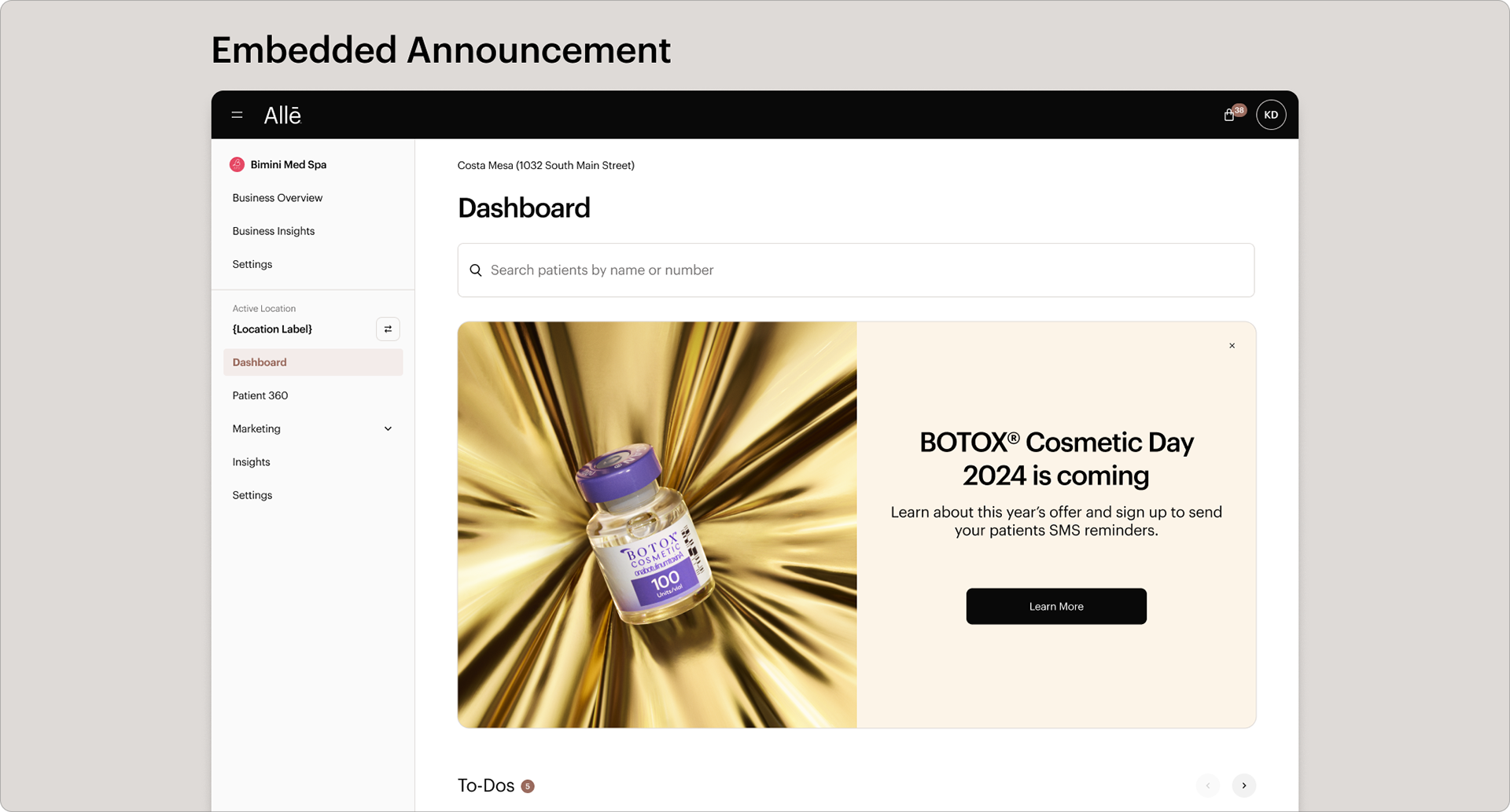
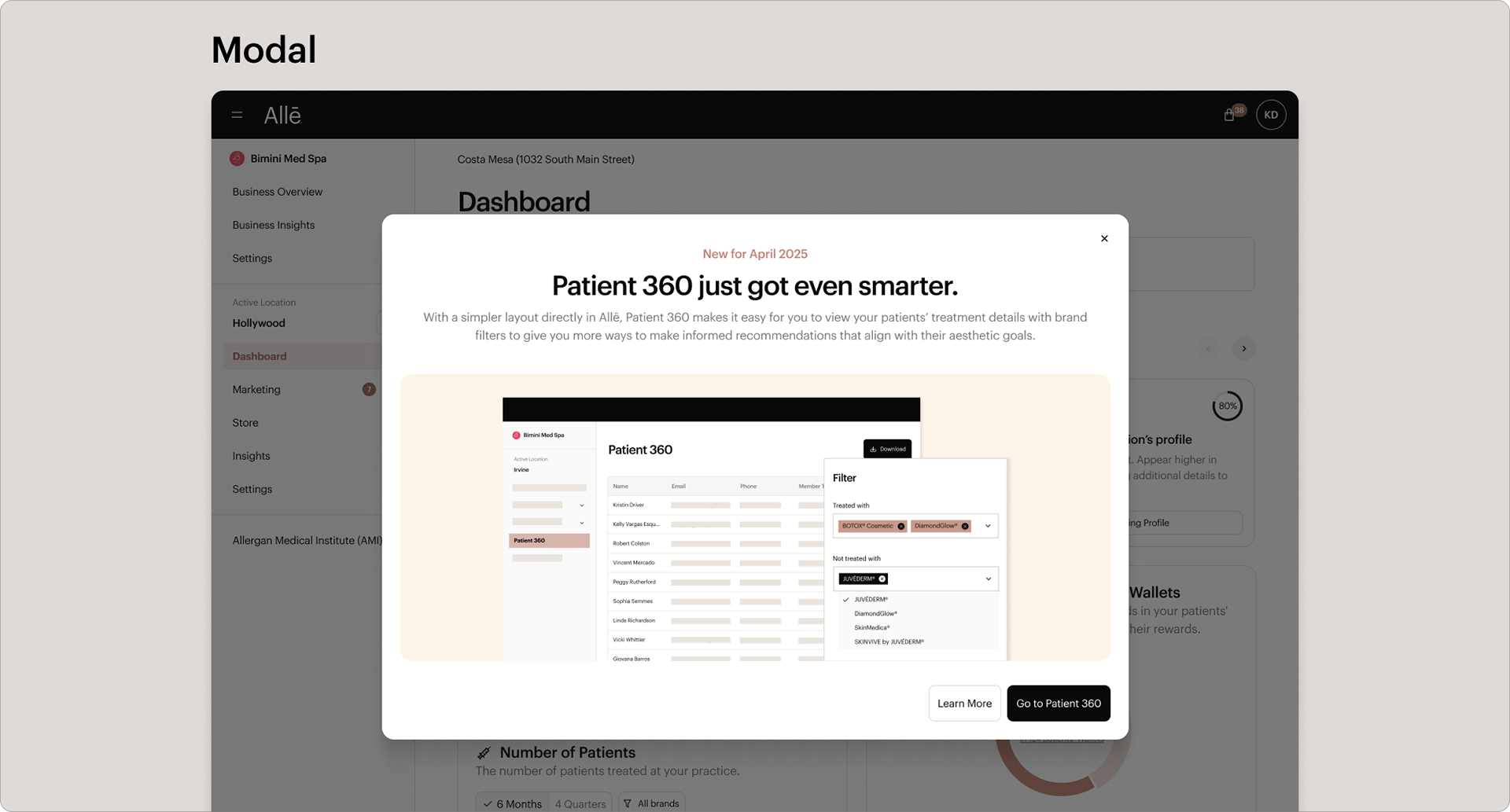
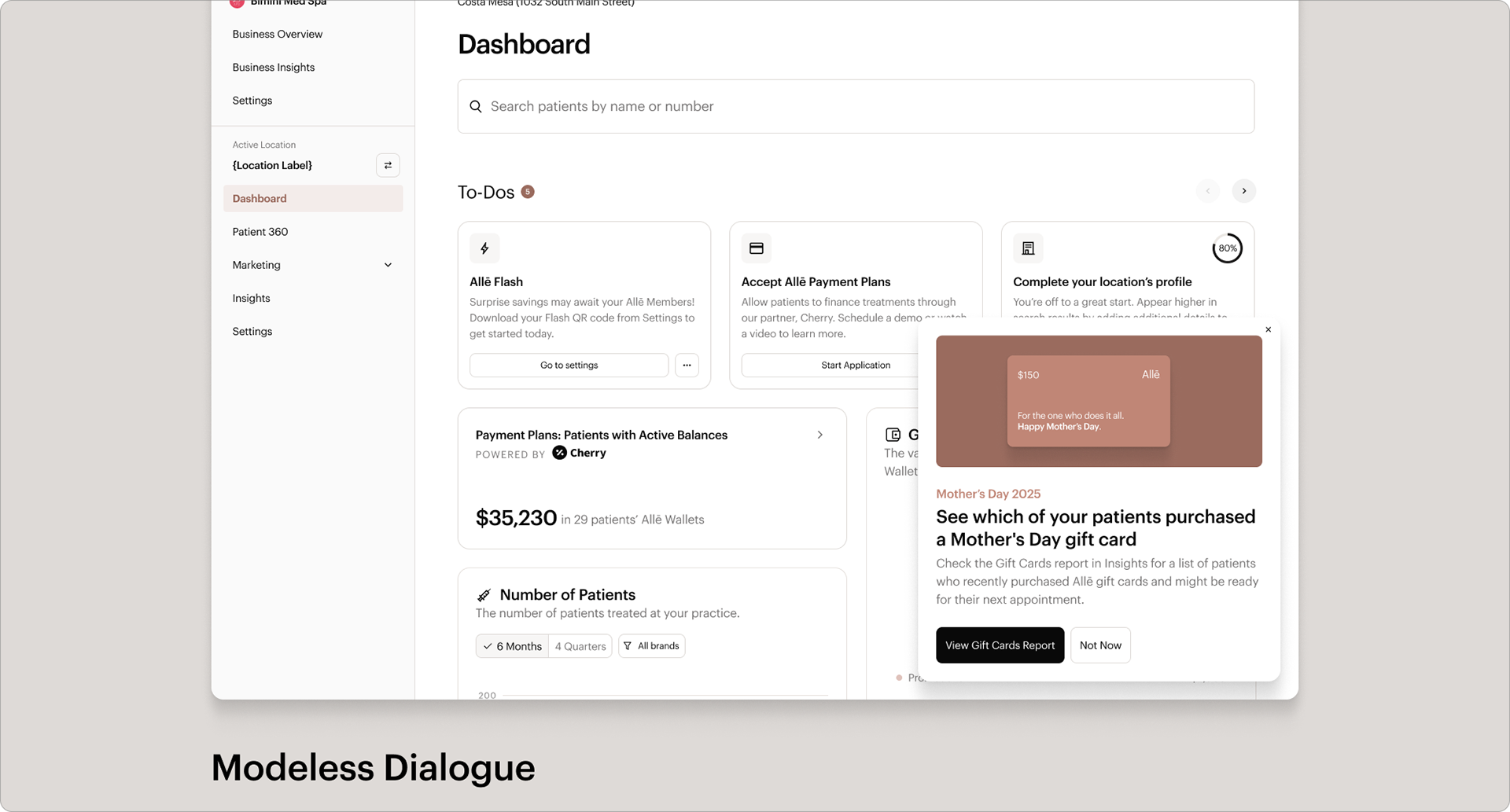
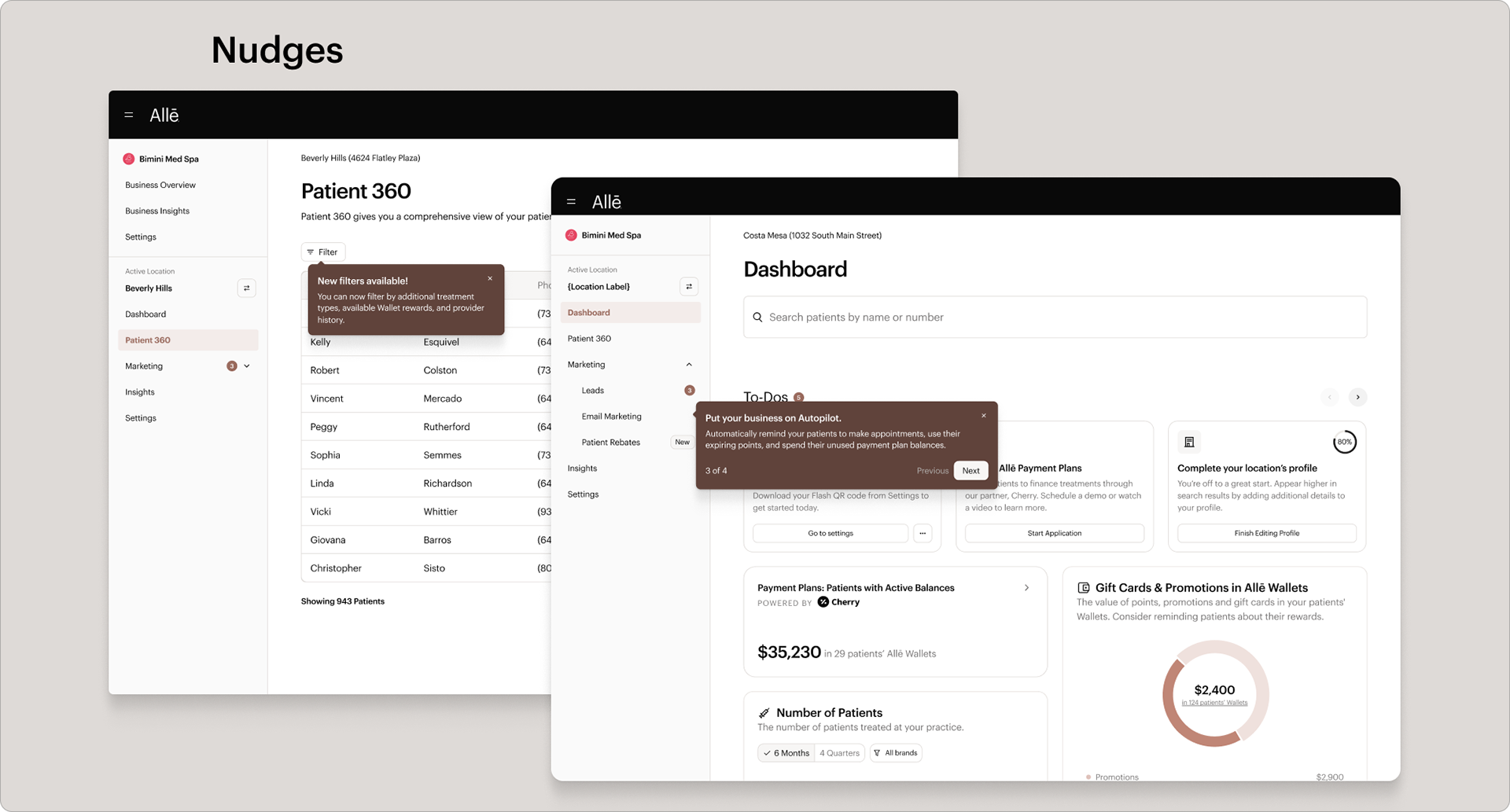
Modal: Two sizes; attention-grabbing announcements for major updates. Modeless Dialog: Smaller floating box; contextual announcements without interrupting workflow. Banner: Persistent element; system alerts, errors, or onboarding prompts. Embedded Announcement: Like a banner but with image on left, text on right. Nudge: Lightweight tooltip-like component; guides attention to a specific UI element.
Components were scoped to balance visibility with usability, each with clear use cases and guardrails.
Creating a Sustainable Request Process
Working with product marketing, I defined a lightweight intake process: a single form where requesters specify audience, timing, content goals, and duration. Design review checkpoints kept brand tone, visual alignment, and UX fit on track. Pendo segments delivered the right message to the right users at the right time.
Result: requests handled in days, not weeks.
Navigating Legal and Compliance
Every Pendo guide, even a tooltip or banner, had to pass through MLRC (Medical, Legal, Regulatory, and Compliance) review before going live. I streamlined this by limiting visual styles to reduce the chance of non-compliant formatting, standardizing content fields with supporting rationale for legal reviewers, building buffer time into the request form, and locking approved content in Pendo so any changes triggered a new review cycle.
Results
The dev-less system is now in place. Internal teams can launch in-app campaigns with no code required, freeing engineering for strategic work. Campaigns can be launched or paused in near real time, targeted by behavior, role, or account type. Templates reduce decision fatigue while maintaining brand consistency.
Since rollout: dozens of successful announcements and onboarding nudges shipped through Pendo: seasonal promotions, downtime notices, onboarding for new provider tools.
Reflections
Good design isn't just about pixels; it's about systems. Templates limit options but unlock speed, reduce ambiguity, and raise quality. Design can enable scale without bloat.